
Elevate Youth California Evaluation

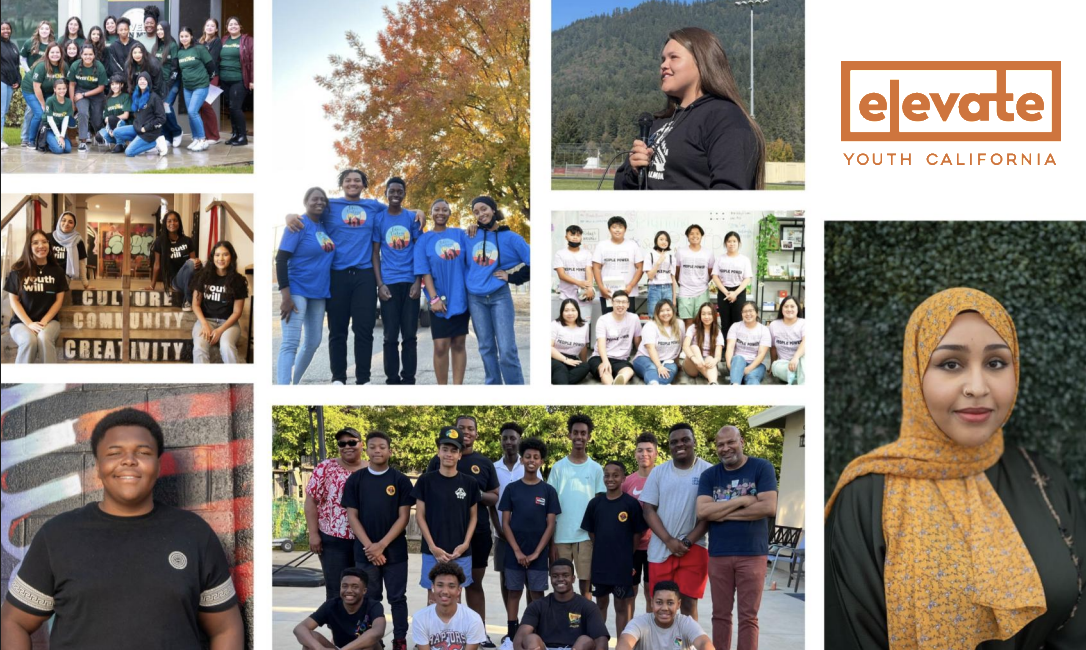
Elevate Youth California (EYC) is a statewide program that addresses substance use disorder (SUD) prevention by investing in youth leadership and civic engagement for youth of color and Two-Spirit/LGBTQIA+ youth ages 12 to 26 living in communities disproportionately impacted by the war on drugs. This statewide program provides funding and technical assistance for organizations that are developing or increasing community SUD prevention, outreach, and education focused on youth.
EYC is a program of the California Department of Health Care Services (DHCS) funded through Proposition 64 California Cannabis Tax Fund, Allocation 3, Youth Education Prevention, Early Intervention, and Treatment Account. The Center at Sierra Health Foundation is contracted to support the implementation of EYC.
About the Evaluation
DHCS, through its contract with The Center, partnered with the external evaluation consultants, Education Northwest and Social Policy Research Associates, to conduct a mixed-methods evaluation of the statewide EYC program. Data sources include cumulative reports from funded partners, a statewide youth survey, focus groups with funded partner staff members, and youth photovoice focus groups.
EYC Round 3 Report
As the first comprehensive evaluation of the EYC program, this report highlights short-term and intermediate outcomes across the 103 diverse programs funded in Round 3 (2021-2024). It also offers key insights and recommendations to enhance youth-focused substance use disorder prevention efforts.
Evaluation Findings
Funded partners made measurable progress toward intended outcomes at the youth, funded partner, and community levels.
At the Youth Level
- Between 92 and 96% of youth participants demonstrated gains in knowledge and confidence to avoid substance use, understand its harms, and seek support.
- Between 40 and 79% of youth engaged in civic action to shape structural changes affecting communities across the state.
At the Funded Partner Level
- Many funded partners reported that EYC funding increased their organizational capacity related to staffing, data systems, partnerships, and the ability to secure funding from multiple sources.
- Funded partners benefited from tailored technical assistance from The Center, including guidance on incorporating youth voice into organizational decision-making and implementing effective program evaluation strategies.
At the Community Level
- Funded partners influenced community-level change, including shifts in policies, organizational practices, and physical and social environments.
- Youth-led efforts resulted in school discipline reform, cannabis awareness campaigns, creation of safe community spaces, and expanded behavioral health support and access to resources.
Future Considerations
The evaluation surfaced several lessons and recommendations to build off the progress made in Round 3.
- Continue and expand investment in youth programming. Prioritize multiyear funding and technical assistance to sustain strong youth outcomes across all tracks, and equip organizations with wraparound supports—such as behavioral health resources, transportation, and essential resource referrals—to reduce barriers to participation.
- Broaden access to capacity-building resources. Embed capacity-building support across all future funding rounds and tracks, and provide funded partners with guidance on grant writing, fundraising strategies, and strengthen regional networks to sustain youth-focused prevention programming beyond the grant period.
- Deepen support for systems-level changes. Provide more tailored technical assistance to help funded partners set SMART (specific, measurable, achievable, relevant, and time-bound) policy goals, and expand peer learning and coaching opportunities that support meaningful youth engagement to ensure youth drive tangible and positive change in their communities.
- Provide specialized support for organizations serving unique populations. Offer specialized technical assistance and flexible funding structures tailored to the distinct needs of organizations serving undocumented youth and youth involved in the juvenile justice system, including culturally specific behavioral health resources and cross-sector partnerships.
- Strengthen engagement and outcomes for transitional-aged youth and boys and young men of color. Invest in culturally responsive, gender-affirming approaches—including mentorship models centered on mentors of color, career-connected pathways, and trauma-informed healing-centered supports—to deepen EYC’s equity impact for youth most affected by the war on drugs.